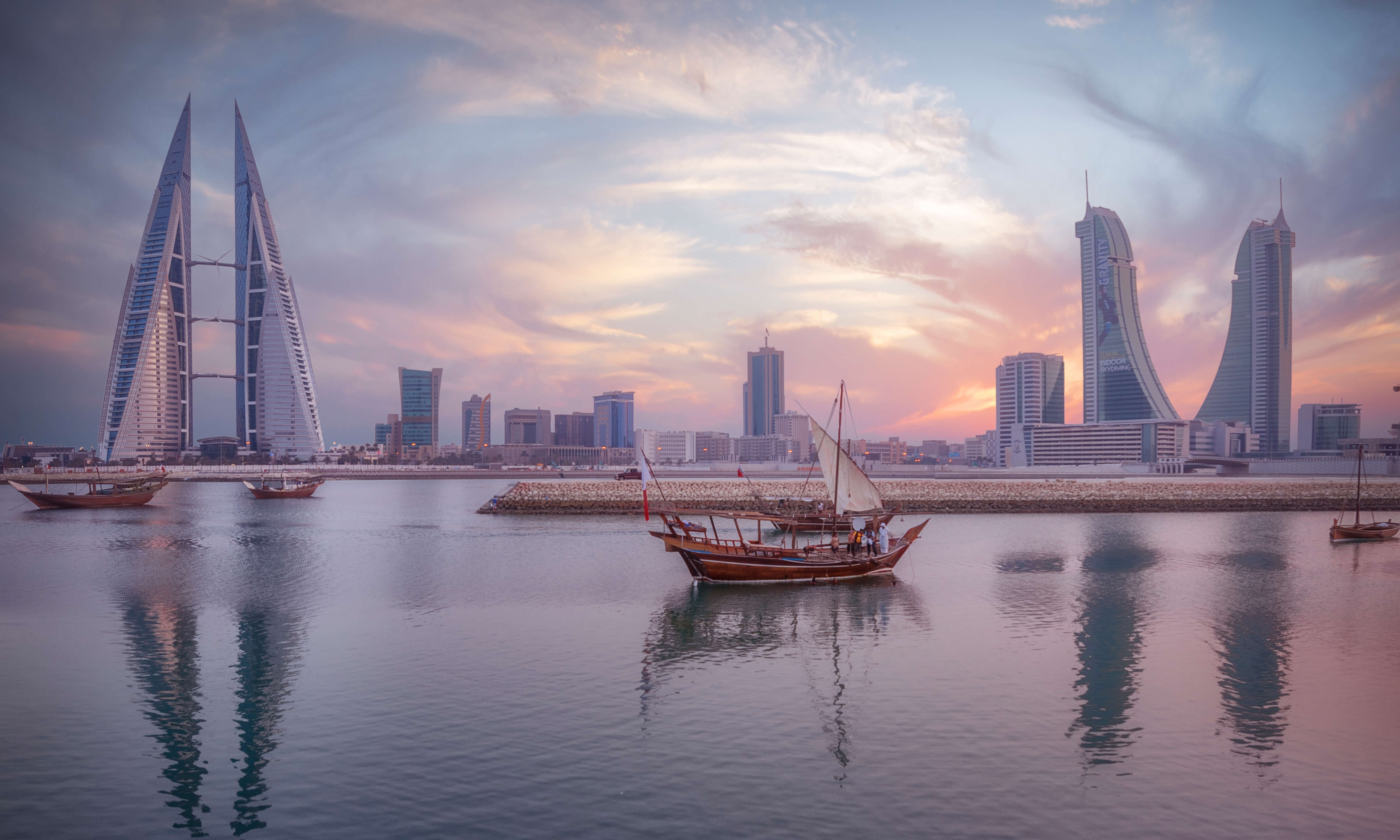
Bahrain Sunset Silhouette

Why the Gulf?

The Gulf Cooperation Council (GCC), located in Arabian Gulf and consisting of states six states (Bahrain, Kuwait, Oman, Qatar, Saudi Arabia and the United Arab Emirates) is one of the fastest-growing markets in the world and has become increasingly significant to the global economy.

It attracts an increasing amount of foreign investment across a broad range of sectors, and its rapid expansion and growth makes it an active seeker for modern infrastructure development, technological capacities and business services. Reforms and improvements have been made to strengthen the private sector to be less dependant on government or natural resources, making the area an attractive location for enterprises and expatriate workers and considering overseas expansions in a competitive market.

The combined GDP of the GCC is expected to reach $1.15trn according to projections issued by the Gulf Finance House (GFH), the Egyptian Al Ahli Bank and the Saudi American Bank (Samba). By 2018, total investment in the GCC could reach up to $670mn (Goldman Sachs Economic Paper No: 166, 2008).

The GCC’s common market grants national treatment to all GCC firms, and in doing so removes all barriers to cross country investment and services trade. Inter-state trade is expected to increase by 25% by 2010, and international trade is expected to increase by multiples (The GCC in 2020: Outlook for the Gulf and the Global Economy, Economist Intelligence Unit, March 2009). Because of its strategic location and history, the GCC has had long diplomatic and trade relationships with Europe, Asia and Africa, suggesting its long-term benefit from the expected growth in these continents.

The GCC’s share of world economy is projected to expand slightly higher than the aggregate global growth with an annual average of 4.5%, compared to 3.3% globally growth. Within 10 years, the GCC is expected to provide nearly one-quarter of the world’s oil supplies as well as increasing quantities of petrochemicals, metals and plastics (Economist Intelligence United Limited, 2009).

The GCC an attractive investment destination and consumer market for imported goods, information technology, and of services to a population that is considered one of the youngest and highest spending powers in the world. The total population in 1998 was over 28 million, but rose to 39 million by 2008, which makes it one of the highest rates of population growth in the world. Food imports alone will double from US$24bn (2008) to US$49bn by 2020 (The GCC in 2020: Outlook for the Gulf and the Global Economy, Economist Intelligence Unit, March 2009).


Investing in the GCC
Despite current economic crises, the GCC remains a very liquid region. Continued economic growth is forecasted across the region moving forwards in several key sectors. Any business considering investment in the Gulf should be centrally positioned to exploit one of the fastest-growing markets in the world. Business Friendly Bahrain can make that happen. Find out how > . 


Third party research below reinforces the region's investment benefits across a variety of economic and FDI indexes.

Inward FDI performance index ranks countries by the FDI they receive relative to their economic size. It is the ratio of a country's share in global FDI inflows to its share in global GDP. Bahrain continues to rank the 12th position out of 141 economies, ahead of all GCC nations. The Outward FDI performance index shows the share of a country's outward FDI in world FDI as a ratio of its share in world GDP. Bahrain ranks 9th of 141 economies, and is the second ranking GCC economy ahead of the United Arab Emirates, Qatar and Saudi Arabia.
Click here to download Overview > 
Click here to download Full Report > 


January 2010-The Index of Economic Freedom, The Heritage Foundation
The report ranks nations according to their relative freedom across 10 different categories. Bahrain tops the Middle East in its score, and ranks number 13 worldwide. Bahrain's economy is very free (76.3%) for a Middle Eastern country, with higher scores than the world average in all of the 10 factors of economic freedom. Business freedom, fiscal freedom, monetary freedom, and especially financial freedom are high.  The complete absence of income or corporate taxes in all industries except oil gives Bahrain a global competitive commercial advantage. Bahrain continues improving in its rank- in 2009 Bahrain ranked 16 worldwide and has improved by three ranks since then.
Click here to view report > 


2009-Global Information Technology Report (2008-2009), World Economic Forum/INSEAD
Recognized as the ‘gold standard’ for benchmarking the networked readiness and technological competitiveness of the world’s economies. Bahrain ranks 37th out of 134 studied countries. Its ranked has improved by eight points since the last annual report. Bahrain ranks the 3rd in the GCC when it comes to technological competitiveness.
Click here to download report > 


Indices Summary


Index

Bahrain

Saudi Arabia

Kuwait

Oman

Qatar

United Arab Emirates

Inward FDI Performance Index

1

4

6

3

5

              4

Outward FDI Performance Index

2

5

1

6

4

              3

Index of Economic Freedom

1

6

3

4

2

              5

Network Readiness Index

3

4

6

5

2

              1